Current answers to the marketing questions consumer businesses ask. Sign in free to read them all.1,898 sources, at least 3 behind every answer.
Plumbers, part three
Black Friday is 7 days out, and today's lead is for the plumbers, electricians and everyone else whose sale starts with a phone call: what a Local Services Ads lead costs and when it pays. After that: a cheaper Meta auction that isn't buying anything yet, a day-by-day pacing plan with one dissent, Instagram's Amazon links with an answer behind them, Meta's terms that aren't taking effect today and two new answers.
By Scott Stroud, Editor
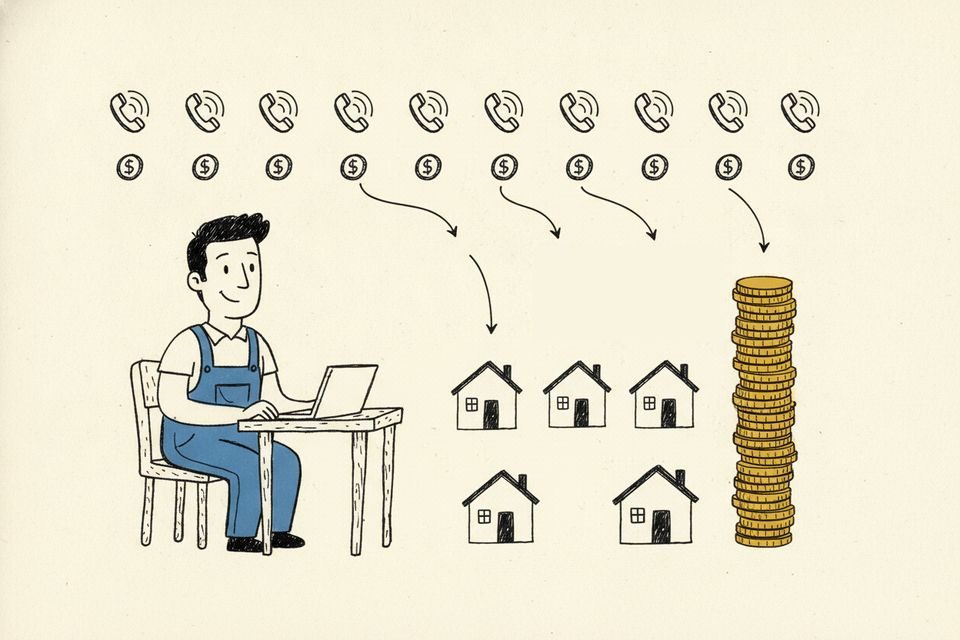
This is the third day in a row for the service businesses, and I promise there's a reason. Google is moving Local Services Ads into Google Ads as pay-per-lead campaigns, and on Wednesday you lost manual lead disputes on the way in. So the number to know is what a lead costs and how many of them turn into jobs. Our answer on Local Services Ads cost and value puts the middle of the pack at $47 to $75 a lead in October 2026, with the costliest 10% paying $90 or more, from the contractor lead analytics vendor SearchLight's data on 969 US home service businesses. In the same data 42.1% of Local Services Ads customers booked a job. The answer's rule is to sign up when a booked job's gross profit clearly beats your cost per lead divided by your booking rate, then budget for at least 10 leads a week, answer calls live and turn off services you don't offer.
That booking rate is the part you control, and Menachem Ani made the holiday version of the point on Thursday: before you raise budgets, check how long new leads wait for a call, because slow follow-up wastes ads that are working (Menachem Ani). Our answer on how fast to follow up leads says within five minutes, started automatically with a text and an email the moment the lead arrives and a call right behind them. It's written for Meta leads, and a plumber paying for each Google lead has even less reason to let the phone sit.
For lead businesses on Google Search, Melissa Mackey's setup for journey-aware bidding made Search Engine Land's newsletter. Assign every real stage of the buyer journey to a standard conversion goal category, and move actions that aren't leads, such as newsletter sign-ups, into "Other" so bidding ignores them. She reports one B2B account raised scheduled meetings 57% (Search Engine Land). One B2B account is a long way from a water heater install, but the setup is the one in our answer on Google lead intent signals, which bids on a qualified lead or a later CRM stage and keeps the form fill as a secondary step.
Seven days, mixed signals
Northbeam's Bryan Bumgardner says Meta cost per click fell 7.6% in the week after the US midterms against the week before, across Northbeam's data (Bryan Bumgardner). ROAS improved and conversion rate didn't, and his read is that a cheaper auction doesn't create buying demand before Black Friday (Bryan Bumgardner). Northbeam sells attribution, and Thursday's Haus figure measured CPMs over a longer window, so I wouldn't call the two a fight. Our answer on Meta budgets around a US election covers why political money leaving the auction moves prices.
Cody Wittick's warning is the one to tape to the monitor. Mid-November results usually look behind plan because spend and revenue pile up late in the month, so don't cut spend or change targets the week before (Cody Wittick). Our answer on budgets for seasonal peaks agrees: open the sale by Sunday, November 22, with pre-built sale campaigns that run through Cyber Monday, November 30. Olly Hudson would go two days sooner. He calls today "Forgotten Friday" and says the Friday before Black Friday converts better than any day outside Black Friday and Cyber Monday (Olly Hudson). He shares no data, so the answer stays at Sunday, but if your sale is built and approved, he'd tell you to flip the switch.
Brad Ploch's pacing plan on the Scalability School podcast treats November and December as one budget (Scalability School). Take 2025's daily share of combined November and December revenue, map each day to its 2026 twin (Black Friday to Black Friday, Cyber Monday to Cyber Monday), multiply by the total budget and log actual spend every day. He also says to confirm your daily budgets and account credit limit can carry peak spend, so delivery doesn't stall on the big day. His one dissent is Cyber Monday, where he pulls Meta budgets back because efficiency usually falls off. That's one podcast against the answer's sources, so the answer keeps the sale running through Monday.
On Google, Ani raises budgets 20 to 30% every couple of days during a pre-Black Friday sale and then makes much larger jumps on the weekend itself (Menachem Ani). Our answer on Google budgets around sales peaks gets to the same place by setting Black Friday and Cyber Week budgets at about 3 times expected spend ahead of time and keeping ROAS targets near recent results, so the campaign has room without you steering it on the day.
Instagram's Amazon links, answered
Thursday's issue held this story for its answer, and the answer is live. Since November 16, eligible US creators with an Amazon Influencer account can add Amazon affiliate links to reels and feed posts, a tap opens the Amazon app and Amazon pays the commission, with Instagram taking no cut (Instagram). Our answer on Instagram creators tagging Amazon listings, new on Thursday, says use both destinations. Let creators tag your Amazon listings for single products that already convert there, and pay a Creator Connections bonus only where margin clears a 15% commission with room left for ads. Give the same creators a tagged link to your site for bundles, subscriptions and site-only offers, and judge each creator on site and Amazon sales together.
The agency Common Thread Collective adds the paperwork. Fix your Amazon listings first, reach the creators in your category already in the program and add clauses on Amazon affiliate linking, disclosure and exclusivity to paid creator contracts (Common Thread Collective). Our answer on usage rights in creator contracts already wants every platform and ad type named in the license, and an Amazon link in a post you paid for is one more line to name.
Meta notes
- Callback to Thursday. Common Thread Collective says Meta's updated advertising terms take effect for all advertisers today, November 20 (Common Thread Collective). Meta's own terms pages, read today, say the updates are on hold and the existing terms still apply (Meta). Go with Meta on Meta's terms. The post's practical advice works under any terms, though: if you don't want Meta editing your images, turn off Background generation, Image brightness and contrast and Visual touch-ups in each ad set's creative enhancements.
- Our answer on Meta's creative enhancements decides feature by feature and fences anything that alters product images until your own Creative report shows the variants beating your originals.
- Northbeam ran an automated geo holdout of Meta for Carpe, a subscription antiperspirant brand, and says Meta drove 1,472 incremental new orders and $63K in incremental revenue, with incremental orders 49% higher than a clicks-only attribution model credited (The Media Buyer). That's a vendor case study with no test length or holdout share given.
- Our answer on designing a lift or geo test wants at least 15% of markets held out and four weeks or more, so ask for both before quoting the 49%.
- Two creative takes from Thursday. Fraser Cottrell says more volume isn't the fix for bad performance, since one winner can keep working for 6 months or more (Fraser Cottrell). David Herrmann says a pile of near-identical ads that only change the headline isn't volume at all (David Herrmann).
- Our answer on new creative volume sides with Herrmann on the definition, making half or more of new ads new concepts, and Cottrell's six-month winner is one anecdote against the pace it sets.
- Barry Hott says Meta's connector for Claude Code uploaded his videos and duplicated ads to launch new ones accurately, with no third-party tools (Barry Hott).
- Our answer on letting AI agents manage campaigns is happy to let agents build and upload ads, and he says nothing about letting one touch live budgets, which is where the answer draws its line.
- Performance Max brand settings now include Visual Guidelines: up to 3 style reference images, content preferences and instructions on what to avoid, steering AI-generated and AI-enhanced images only, not video or text, and still rolling out (Common Thread Collective). Our answer on Performance Max asset automation settings treats every automation setting as a decision, and image generation now has a steering wheel as well as an off switch.
- Google's main account told advertisers to turn on AI Max before Black Friday (Google Ads). On the same day, Google's Ads Liaison said to make the data prove a new bidding strategy or AI Max works before adopting it (Google Ads). I'm with the Liaison, and so is our answer on turning on AI Max for Search, which turns it on only through Google's own experiment.
- From November 19, Google allows online gambling, fantasy sports and prediction-market ads on YouTube Home and Search for certified advertisers, effective the day it was posted (PPC Land). No answer of ours covers regulated categories, but expect some new neighbors in those auctions.
- Google Analytics budget plans can now break out individual ad platforms in place of only channel groups. Google's help page says the tool won't affect budgets or spend in your connected accounts, so it's a planner (PPC Land).
Email, store and elsewhere
- The agency Darkroom says keep email and SMS with a fixed-fee retention agency until about $20M a year in revenue, with retention driving 35% or more of it, and puts retainers at about $3K to $5K a month for brands with $1M to $5M in yearly revenue (Darkroom). That's an agency pricing its own category.
- Our answer on email and SMS in house or with an agency brings the work in-house much earlier, by $5M to $10M in yearly revenue, once email and SMS are a top revenue channel, and it holds.
- Chase Dimond cites an Echelon Insights survey of 2,009 US adults in November in which 62% called paying for return shipping unreasonable and 72% said the same of 10% to 25% restocking fees, and he says to state easy exchanges right below the main button of Black Friday emails (Chase Dimond). He notes those are attitudes, not lost orders.
- Our answer on return policy and how to show it keeps returns free or a small fee stated before purchase, with a one-line policy beside the buy button.
- Shopify opened the Shop app and Shop.com to stores that don't use Shopify Payments on November 10. Those stores get free listing but still can't run paid Shop Campaigns (Common Thread Collective).
- Our answer on Shopify's Shop app and Shop Campaigns says the free work there is product data, reviews and fast fulfillment.
- HUMAN Security found a fraud scheme it calls BADBOX 3.0 running hidden video ads on backdoored cheap TV sets, sending up to 40 billion fraudulent bid requests a day at its peak from the owners' home IP addresses while posing as real connected TV apps (AdExchanger).
- Our answer on fraud and junk inventory on connected TV says know where every impression ran and keep fraud filtering on, and a TV set lying about its own identity is the reason.
- Adobe's data, reported by Modern Retail, says visitors that AI tools sent to US retail sites converted 90% better than other channels in September 2026, against 9% worse in August 2025 (Modern Retail). Those visitors chose to click, and Adobe gives no sample size.
- Our answer on AI agents in conversion data still bids on backend-confirmed purchases, whoever sent them.
New in the book
Two new answers on Thursday, one already in the Amazon story. The featured one: our answer on discounts in cart emails says don't put a discount in every cart reminder. Send the first emails with no offer, using them for the cart, reviews, returns and the full cost with shipping, and save any offer for the last email, at 48 to 72 hours. Give it only to shoppers who have never bought, as free shipping or 5 to 10% off with a real expiry, and keep it only if it beats a random group of first-time abandoners held out of it. Black Friday week is when everyone's tempted to code every cart, which is exactly why this one's featured.
Thanksgiving is in 6 days. Black Friday is in 7 days.
Every fact links to its source. Opinions are the writer’s, built from the sources linked beside them.