Current answers to the marketing questions consumer businesses ask. Sign in free to read them all.1,958 sources, at least 3 behind every answer.
Step away from the edit button
Thanksgiving is tomorrow, and the most expensive thing you can do this week may be a panicked edit. So this issue opens with how to tell a bad day from a broken campaign. After that: sale ads and how shoppers feel about your discount, Muse goes shopping at Walmart and in the UK, Google's core update finally lands, a new kind of Google ad you can't edit, and Amazon paying ChatGPT while locking it out.
By Scott Stroud, Editor
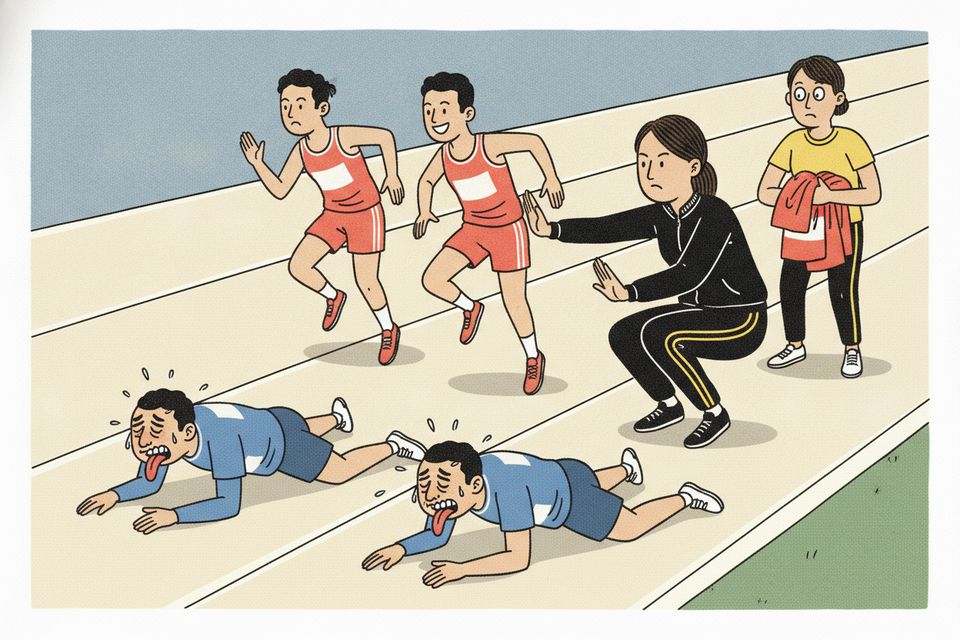
Phil Graham's advice on the Next Level Facebook Ads Podcast fits on a sticky note: if your cost per purchase or cost per lead rises for a day or two in Black Friday week, don't rebuild or change the campaign, and wait for about a week of sustained change before you act (Next Level Facebook Ads Podcast). He adds that CPMs and conversion rates simply behave differently this week. Callback to yesterday, when Phil Kiel warned that early starters should expect a slow few days. Same message, different Phil.
Our answer on fatigue, a learning reset or a seasonal dip gives you the test before you touch anything. If costs are up on every ad, new ones included, that's the auction or the season, so check the same days a year earlier. If only your older ads slide while frequency climbs, that's fatigue. And if you edited an ad set and it's back in learning, it needs time, not new ads. The edit itself is the other trap. Our answer on how often to edit campaigns changes a bid, cap or ROAS goal no more than once a week, 5 to 10% at a time, which rules out the Wednesday-night cost cap swap I suspect some of you are planning.
Now the counterweight. Cody Plofker says on Marketing Operators that brands should be willing to pull spend over the Cyber Five if total sales against total ad spend (MER) turns inefficient, even when they're pacing to their revenue target (Marketing Operators). I don't think the two advice lines fight. Graham is talking about rebuilding campaigns, Plofker about the budget dial. Our answer on the business metric that governs spend sets the dial from a monthly contribution-margin target, so a bad day at a good margin is a hold, and a week of spend below margin is a cut. Our answer on a review cadence for campaigns has the rhythm for the weekend: look daily, change weekly.
One more from the same episode: Plofker reads a 1-day click result up 30% on a year earlier as a signal to push. Our answer on attribution windows judges results on 7-day click, so treat a 1-day spike as a hint to check, then decide on the longer window and your store totals.
Sale ads and sale fatigue
Two late creative notes. Nick Theriot says to run statics and videos built around the offer, plus your top video and photo ads with a sale banner added (Nick Theriot). Pilothouse's Meta team says to get 2 to 4 backup concepts approved before Black Friday, because ad review slows that week and editing a live ad can send it back into review (Pilothouse). Our answer on building sale ads alongside evergreen ads wanted those approved before the week of November 17. If you missed it, the banner-on-a-winner trick is the cheapest catch-up, and send it to review today rather than Friday.
Now the bad news about the offer itself. In a Harris Poll survey reported by Marketing Brew, 79% of US consumers said sales and discounts aren't as good as they used to be, nearly three quarters called Black Friday and Cyber Monday more hype than real savings, and more than half said the longer sale window makes it harder to know when to buy (Marketing Brew). Our answer on Black Friday offer size makes the sale a clear step above your everyday offer, typically 20 to 30% off sitewide and below your break-even discount. A shopper who thinks the deal is fake needs to see that step, so show the everyday price next to the sale price. The same story has the brand Aquasonic staggering deals product by product through November instead of one month-long sale, which sits close to our answer on planning a promotion calendar: a few sale moments customers expect, full price in between.
Meta notes
- Muse had a busy Tuesday. Meta launched it in the UK with retail partners including Marks & Spencer, Currys, Argos, Sainsbury's and ASOS, with checkout through Shop Pay at supported Shopify stores, and says Muse conversations aren't shared with its ad systems, which is Meta grading itself (Meta). In the US, Muse can now shop Walmart's Black Friday deals, with Walmart's systems picking which items fill a request (PPC Land).
- Our answer on getting recommended by Meta's Muse still says do the cheap groundwork and hold off on budget: products in Meta's catalog, and price, size and stock in page text an agent can read. If you plan to connect your store, our answer on connecting store data to Muse starts read-only.
- Digiday reports, from unnamed sources, that Meta is exploring extending its audiences to connected TV inventory it doesn't own (Digiday). Meta hasn't announced anything.
- Our answer on when connected TV makes sense adds TV once Meta and search stop scaling and you can fund a readable test, and a Meta button wouldn't change the test.
- Jon Loomer says on his podcast that advertisers should use Meta's incremental attribution model in almost all cases (The Pubcast).
- Our answer on Meta's Incremental Attribution setting agrees for volume campaigns and warns the reported ROAS will drop. I wouldn't switch on Black Friday morning, though, unless you enjoy explaining a new number to your boss on the busiest weekend of the year.
- Google's November 2026 core update finished rolling out on November 24 after 14 days (Search Engine Roundtable), and Google has already preannounced a December core update with no start date (PPC Land). Our answer on recovering from a core update waits a week after the finish before changing anything, and that week is Black Friday and Cyber Monday, so compare traffic against the same days a year earlier, not last week.
- Nils Rooijmans flags Google's AI explainers, a Gemini-written sentence above the regular ads that names several advertisers with each name linked. He says those links are charged as full clicks but show none of your headlines, you can't edit or opt out, and the clicks get no separate row in reporting (Nils Rooijmans). Our answer on ads in AI Mode and AI Overviews says you can't buy or block these placements separately. If your headline did the qualifying ("from $2,000", "homeowners only"), move it to the landing page.
- Menachem Ani points out Google's promotion mode, in beta for Target ROAS campaigns: set the sale dates, a ROAS tolerance and extra daily budget, and the campaign reverts afterward (Menachem Ani). Our answer on Google promotion mode for sales says yes when margin allows a lower ROAS, with settings entered before the sale starts. Two days out, that means today.
- Search Engine Land rounds up the Google spend debate, with Optmyzr data putting median Google Ads spend up 5% in Q3 2026 against a year earlier, impressions down 11% and cost per click up 6% (Search Engine Land). That's single digits, which is what our answer on Google click cost moves expects in most datasets.
- For the service businesses: Google rewrote its partner bookings page as the Book Appointment conversion goal, which groups bookings from scheduling partners, your own site and calls, and doesn't allow it in healthcare campaigns (Search Engine Roundtable). Our answer on booked against attended appointments optimizes for attended appointments once you have the volume, otherwise booked. Google Business Profile also added self-serve controls for booking and reservation links and a one-form appeal for suspended profiles (Search Engine Roundtable), which belongs on the checklist in our answer on Google Business Profile for stores.
AI and other channels
- Amazon is running US Black Friday ads in ChatGPT while blocking OpenAI's crawlers, so ChatGPT links Amazon products to Amazon search results instead of product pages, and an eMarketer analyst warns brands may pay twice, once for the ChatGPT pick and again for the sponsored spot on Amazon's results page (PPC Land).
- Our answer on selling through AI shopping assistants keeps you listed and puts the work into complete product data on your own store, which is the page ChatGPT can still read.
- ChatGPT ads now accept some US health advertisers case by case, such as hospitals, urgent care and supplements, but not regulated products or treatment claims, and not in conversations that imply a health condition (AdExchanger).
- Our answer on ads inside AI assistants still treats them as a test for spare research money, sized for about 30 new-customer orders.
- The ANA's latest programmatic benchmark found only 43.1% of programmatic spend reached quality media last quarter, and 24% of connected TV spend went to inventory that couldn't be measured (AdExchanger).
- Our answer on junk inventory on connected TV buys only where you can see which apps and shows ran your ads.
- Common Thread Collective warns that cutting TikTok Shop on its own Q4 profit can cut demand that shows up as Amazon sales (Common Thread Collective).
- Our answer on measuring TikTok's effect on sales judges TikTok on total sales across your site and Amazon, for exactly that reason.
- Peec AI tracked where the first link sits in Google's AI Overviewsin the first third of the answer 76.8% of the time on September 21, and 51.8% by November 20 (Search Engine Roundtable). Links lower down won't help clicks, and our answer on AI Overviews and clicks already judges search on leads and sales, not clicks.
Thanksgiving is in 1 day. Black Friday is in 2 days. Google's Demand Gen rewrite lands in 6 days.
Every fact links to its source. Opinions are the writer’s, built from the sources linked beside them.